










Bản quyền © 2026 ROTER Fresh Air Technology Wuxi Co., Ltd. Mọi quyền được bảo lưu. Website Design by Wangke
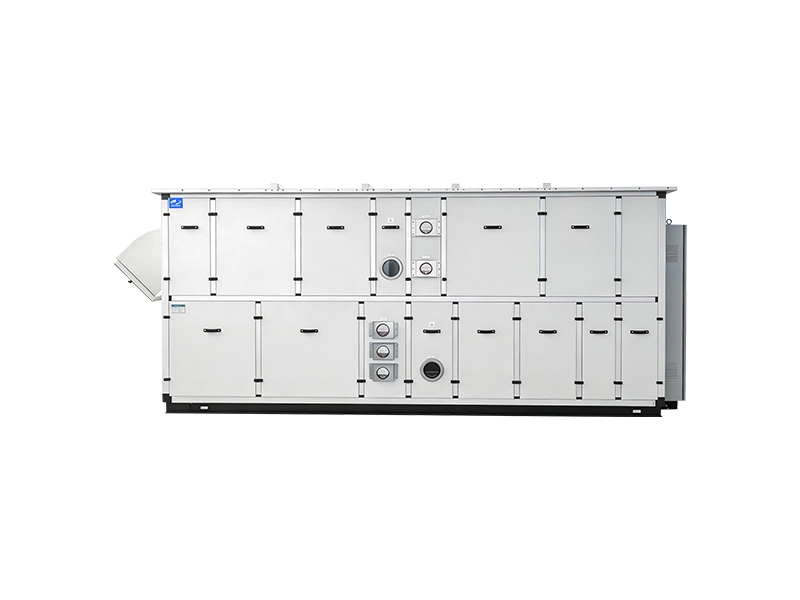
Máy hút ẩm bánh xe điểm sương thấp
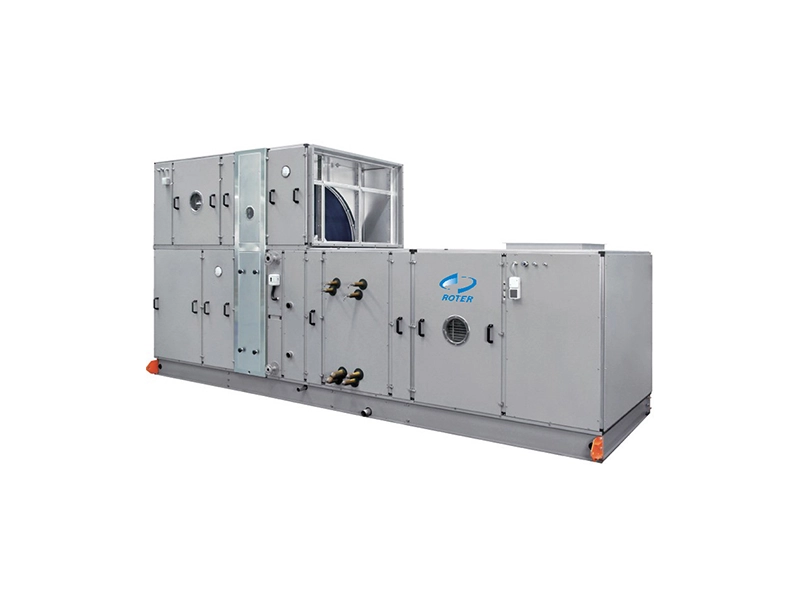
Máy hút ẩm bánh xe kết hợp
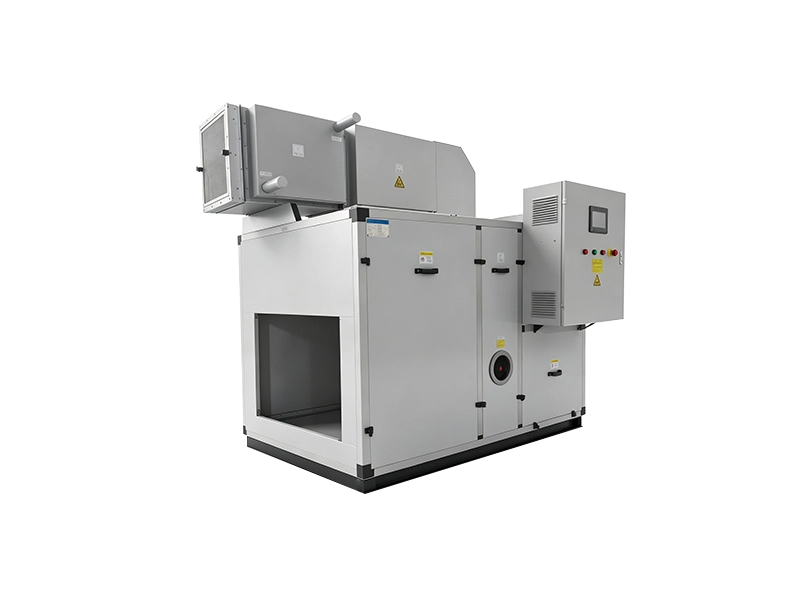
Bộ phận hút ẩm bánh xe phần
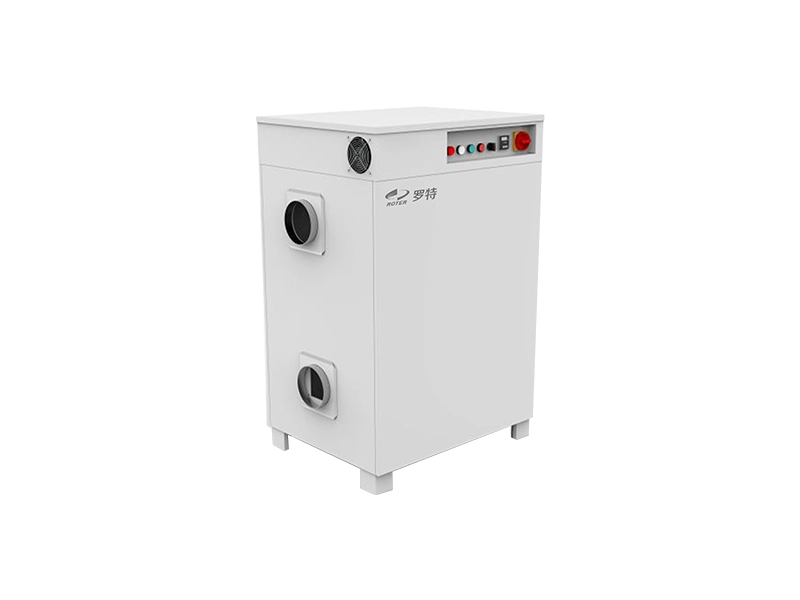
Máy hút ẩm hút ẩm bánh xe nhỏ
A wheel desiccant dehumidifier holds a rotating rotor in a steady state by alternating between a dehumidification stage and a regeneration stage, so it can reach humidity levels that a refrigeration unit cannot reach at all. ROTER builds the range in four configurations, and the choice between them is mostly a question of how the unit is meant to be integrated into the air handling system.
The small wheel desiccant dehumidifier is a self-contained unit. It uses a Swedish Proflute rotor rated for 10 years of continuous operation without failure, SCR constant-temperature control technology for more stable long-run operation, low dew point dehumidification operation, and PTC heating technology. The Proflute rotor is the point of the machine: its rotor material and sealing are specified for a decade of continuous duty rather than a maintenance cycle.
The wheel-section wheel desiccant dehumidifier unit comprises only the rotor dehumidification section and typically needs to be operated in conjunction with other air handling units. The wheel-section can be connected to the air handling unit either by duct connection or by flange. This is the configuration for OEMs and system integrators who already have the fan, the cooling and the casing, and only need the dehumidification section.
The combined wheel desiccant dehumidifier unit can be operated with air conditioning chilled water, or alternatively connected to a direct expansion refrigeration unit. The unit is equipped with a surface heat exchanger, enabling the supply air to be delivered at a controlled condition. In other words, it pairs the desiccant section with cooling so the outlet air is not only dry but also at the right temperature.
The low dew point wheel desiccant dehumidifier unit uses a special unit structure to process the air to ultra-low humidity. It can dehumidify the air down to below 1% relative humidity at minimum, reaching a near absolute-dry state at an air dew point well below what any refrigeration method can hold. This is the unit specified for lithium battery, pharmaceutical and electronics production, where the humidity control band keeps tightening as the process becomes more sensitive.
| Configuration | Choose it when | What you supply |
|---|---|---|
| Small wheel desiccant dehumidifier | The unit has to work on its own, in a room or a small enclosure | Power and the room; the unit is complete |
| Wheel-section | You already have an air handling unit and only need dehumidification | The AHU, plus duct or flange connection |
| Combined | You need dry air at a controlled temperature | Chilled water or a DX refrigeration connection |
| Low dew point | The target is below 1% relative humidity | Power, ductwork and a controlled enclosure |
Common dehumidification methods include refrigeration dehumidification, compression dehumidification, solid adsorption, liquid absorption and rotary desiccant. Each has a working band. Refrigeration is cheapest in ordinary conditions but loses capacity as the air cools and the coil ices. Adsorption and absorption handle low temperatures but need more energy and regeneration capacity. The rotary desiccant method works across a wide temperature range without a defrost cycle and reaches below 1% relative humidity, at the cost of a larger unit and a continuous regeneration energy load.
For a specific duty, send the airflow, the required dew point or relative humidity, the space temperature and the operating hours, and the ROTER engineering team will propose the configuration.

Một doanh nghiệp dựa trên công nghệ chuyên nghiên cứu chất lượng không khí và sản xuất chuyên nghiệp các thiết bị thông gió tiết kiệm năng lượng và hiệu quả